Tuesday, 30 June 2015

Land Transportation
  • The movement of people, animals, and goods from one location to another on land, usually by rail or road.


  1.  Human-powered


    • A form of sustainable transportation. 
    • The transport of people or goods using human muscle-power, in the form of walking, running and swimming.
    •  Human-powered transport remains popular for reasons of cost-saving, leisurephysical exercise, and environmentalism
    • Sometimes the only type available, especially in underdeveloped or inaccessible regions. 
      
       2.  Animal-powered
    • The use of working animals for the movement of people and goods. 
    • Humans may ride some of the animals directly, use them as pack animals for carrying goods, or harness them, alone or in teams, to pull sleds or wheeled vehicles.
       
      3.  Rail
    • Where a train runs along a set of two parallel steel rails, known as a railway or railroad. 
    • The rails are anchored perpendicular to ties (or sleepers) of timber, concrete or steel, to maintain a consistent distance apart, or gauge.
      
      4.  Road 
    • A road is an identifiable route, way or path between two or more places.
    • Roads are typically smoothed, paved, or otherwise prepared to allow easy travel.
    • In urban areas, roads may pass through a city or village and be named as streets, serving a dual  function as urban space easement and route.
       
      5.  Vehicles
    • Any non-living device that is used to move people and goods. 
    • Vehicles need a system of converting the energy into movement; this is most commonly done through wheels,propellers and pressure.
    • Vehicles are most commonly staffed by a driver.
    Transformation of train 


    Wagonways were relatively common in Europe (typically in mining).
    First Train
    George Stephenson invented the first train that had a steam engine.

    World's first useful diesel locomotive for long distances,1924 in Kiev.

    Turbostar
    The Turbostar was the first new train type to be introduced after the privatisation of British Rail.

    Japan built the world’s first high-speed rail network.

    Transformation of Bus


    Passengers were being accommodated on the curved roofs, seated back to back in a configuration known as 'knife-board'.


    Steam-powered buses were pioneered in England in the 1830s.

    World's first trolleybus, Berlin 1882.

    The first internal combustion omnibus of 1895.

    Transportation for passengers to travel.

    Double-decker bus.

    Water Transportation

    • Intentional movement of water over large distances.

    1.Tugboat
    • a boat that maneuvers vessels by pushing or towing them.
    • tugboats are powerful for their size and strongly built, and some are ocean-going. Some tugboats serve as icebreakers or salvage boats.
    • early tugboats had steam engines, but today most have diesel engines.

    Transformation of Ship


    raft is among the simplest boat designs.
    A Japanese atakebune from the 16th century.

    The British HMS Sandwich fires at the French flagship Bucentaure(completely dismasted) at the battle of Trafalgar (1805). 

    RMS Titanic departs from Southampton. 


    The Colombo Express, one of the largest container ships in the world, owned and operated by Hapag-Lloyd of Germany.


    Airplane

    Transformation of Airplane
    The Wright brothers invented and flew the first airplane in 1903.
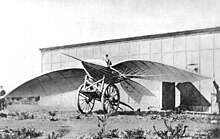
    Le Bris and his glider, Albatros II.

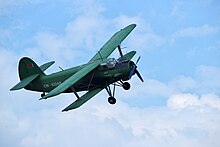
    Plane as a transportation.

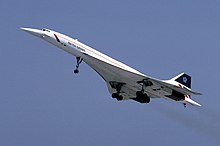
    The Concorde supersonic transport aircraft.


    Humans had created various types of transportation in order to lead an easy life and to save time. All in a nutshell, public transport plays an important role in our daily lives and we should be grateful for what we have.